UOG Drone Corps welcomes sixth cohort, expanding local drone pilot network for local research and community agencies
UOG Drone Corps welcomes sixth cohort, expanding local drone pilot network for local research and community agencies
UOG Drone Corps welcomes sixth cohort, expanding local drone pilot network for local research and community agencies
10/2/2026
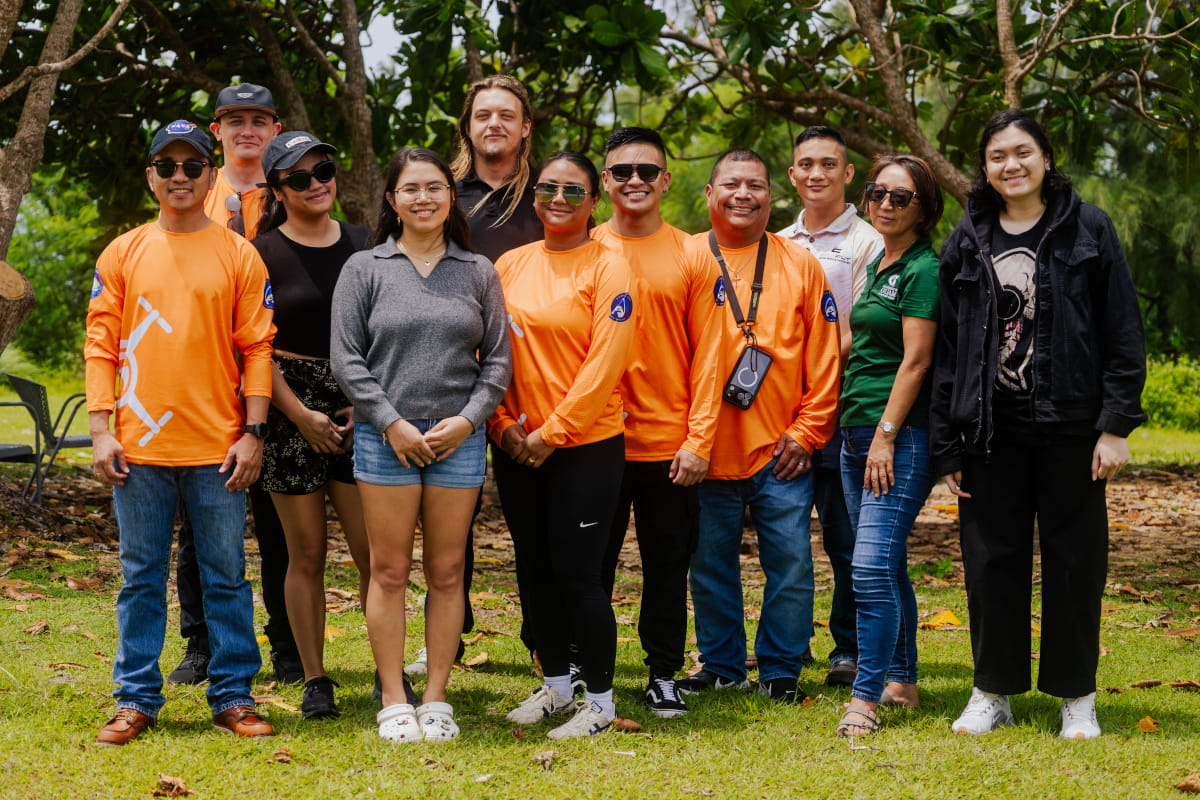
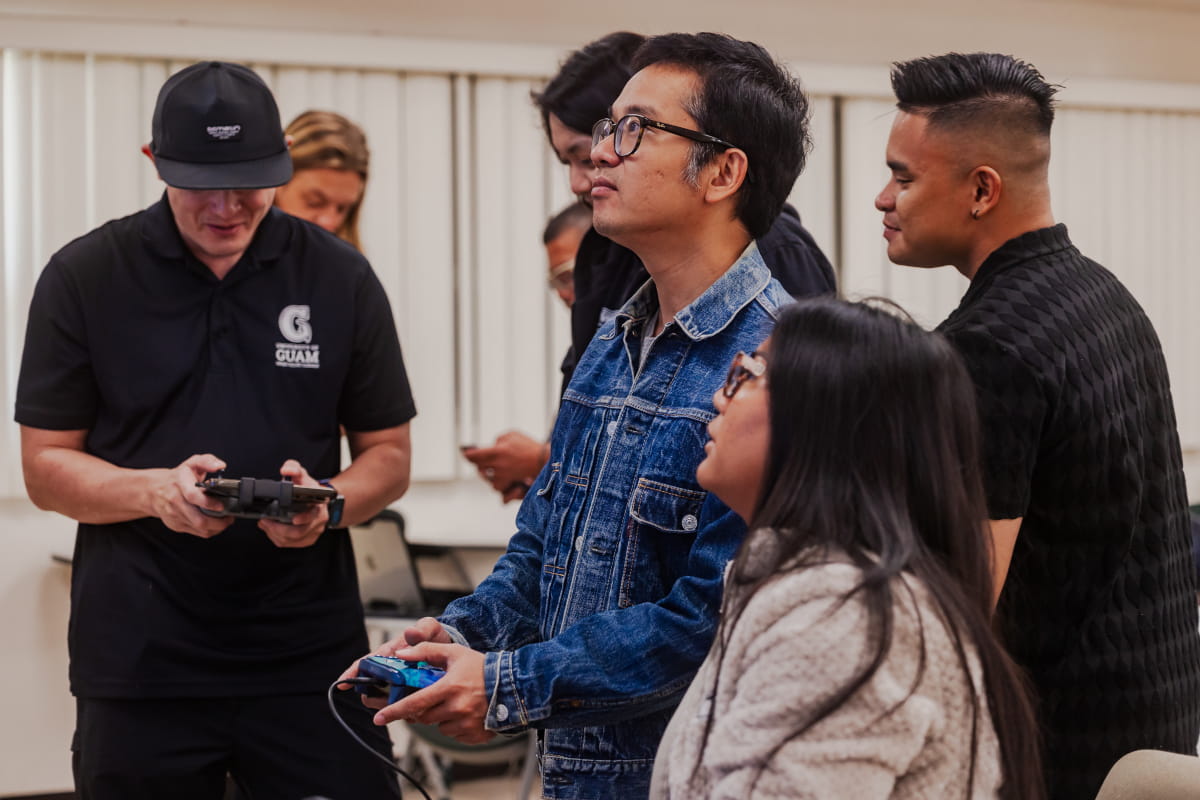
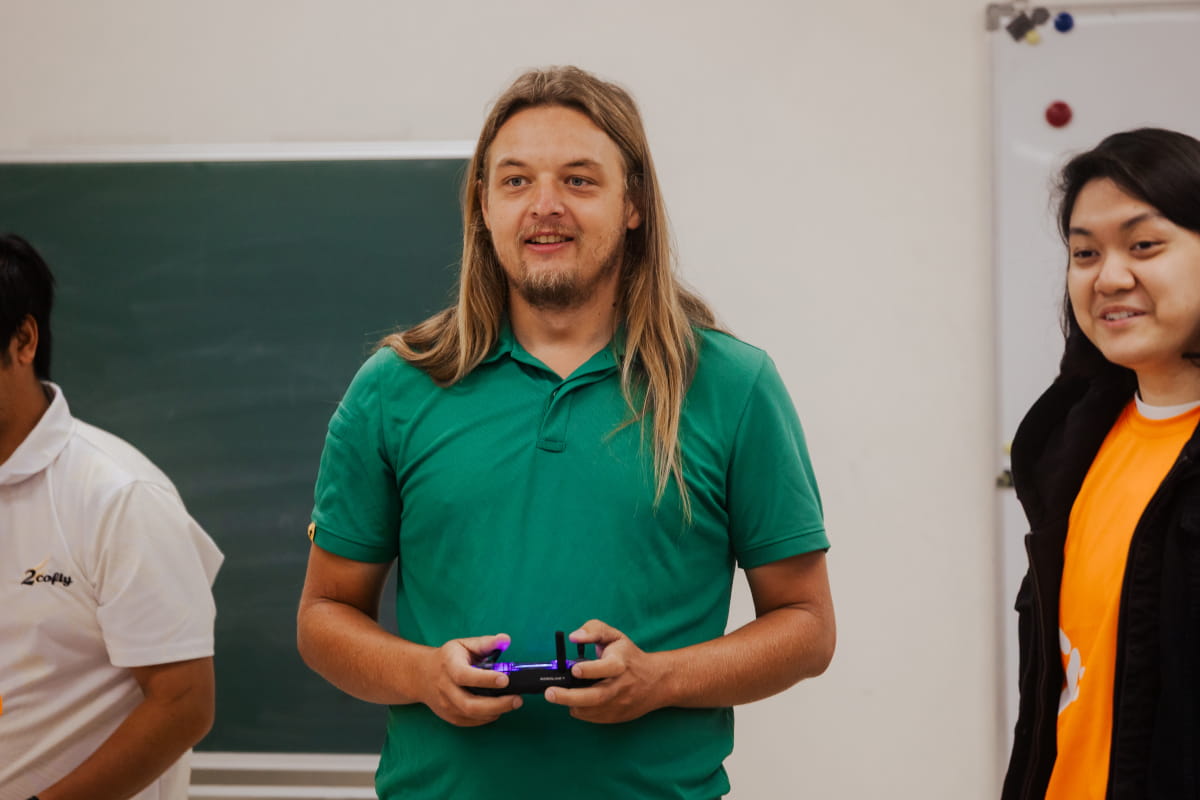

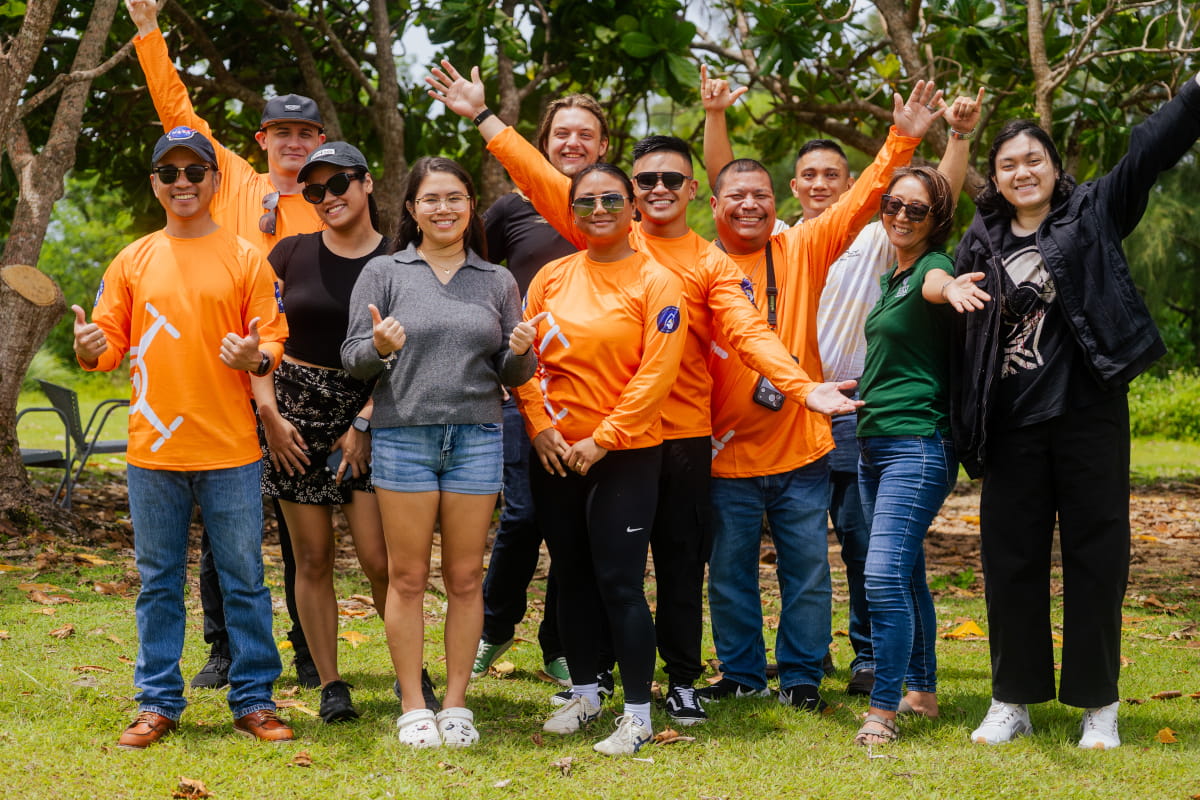
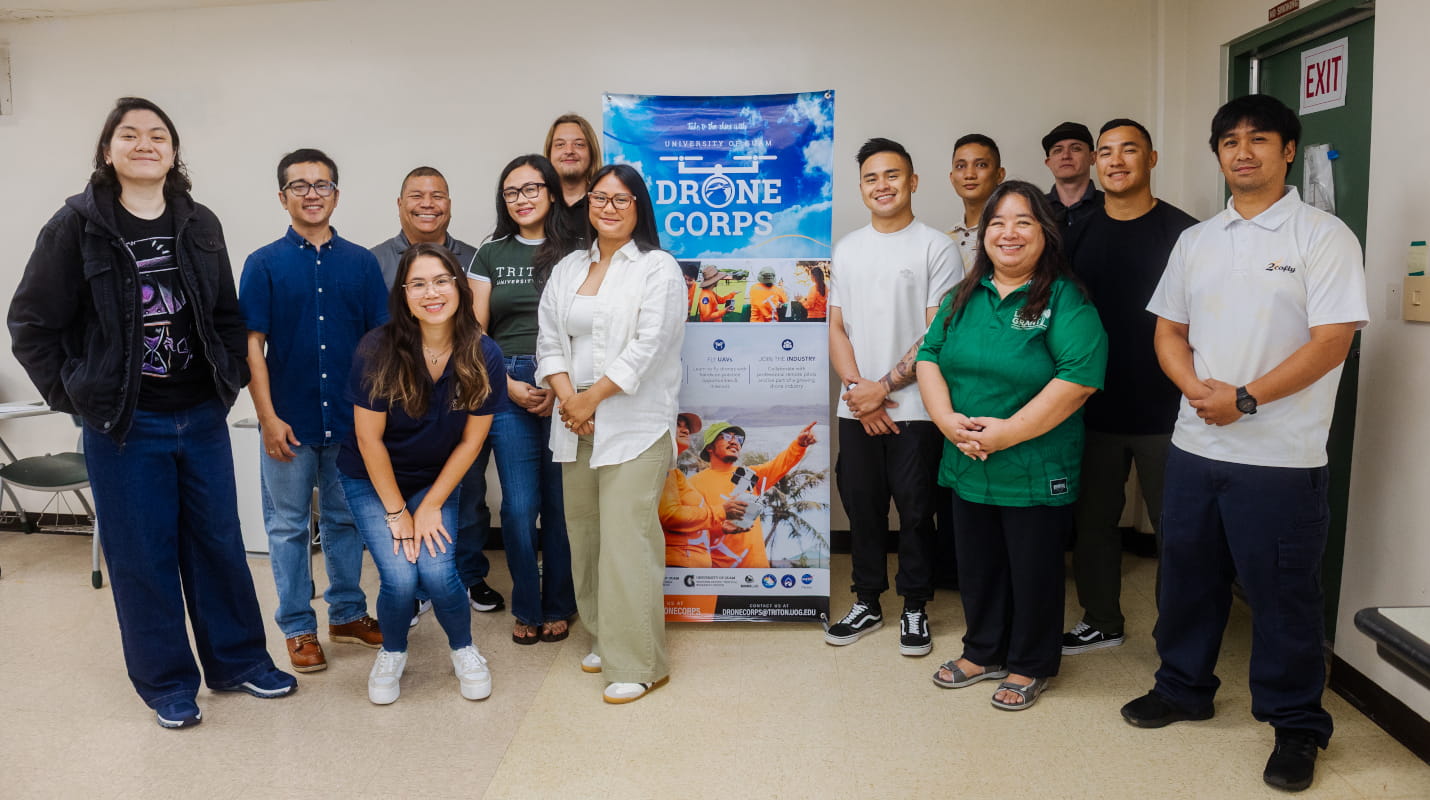
The University of Guam (UOG) Drone Corps has officially welcomed its sixth cohort, strengthening the program’s efforts to develop local expertise in uncrewed aircraft systems (UAS) and expand the use of drone technology for research, environmental monitoring, and community response applications.
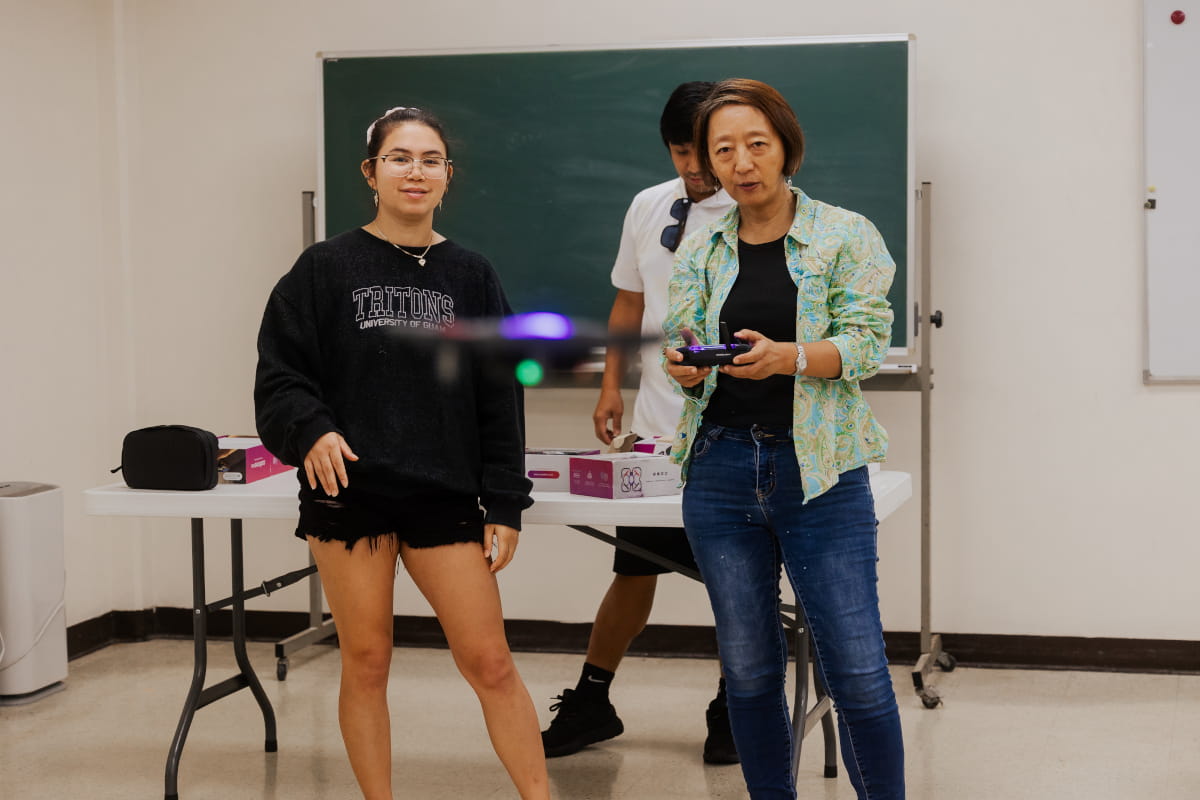
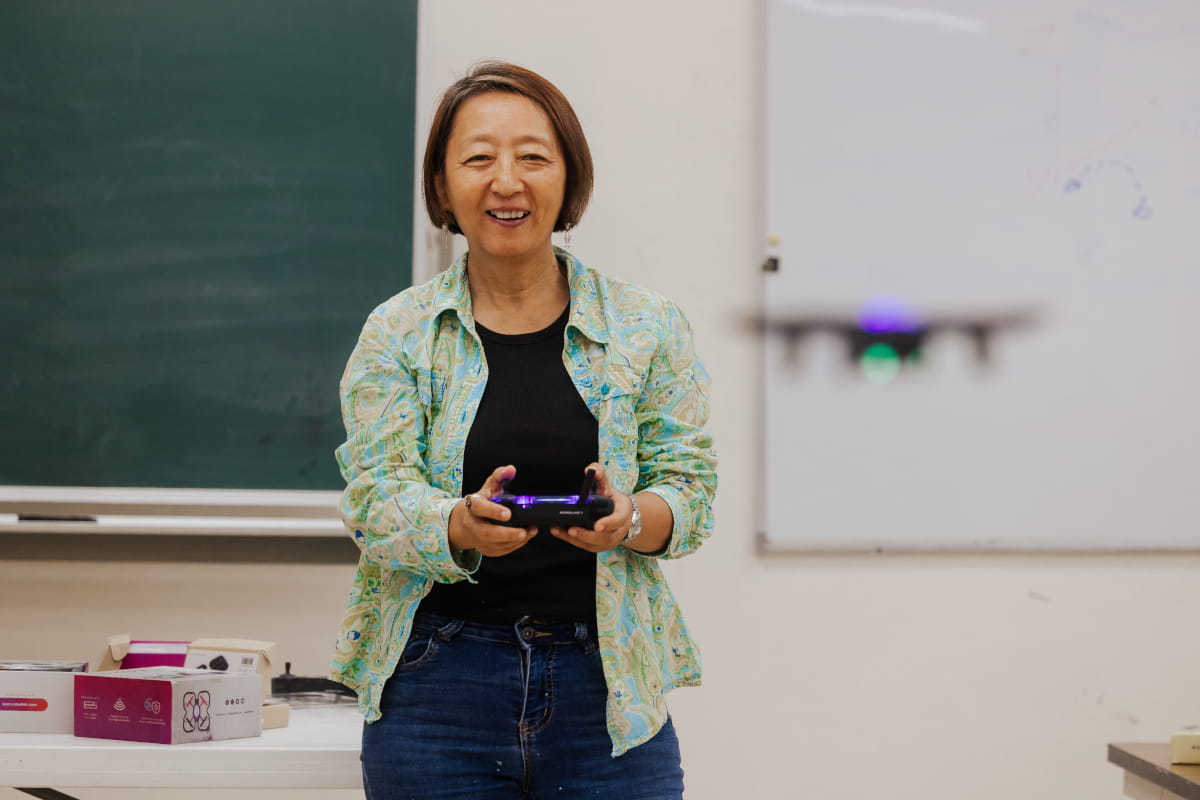
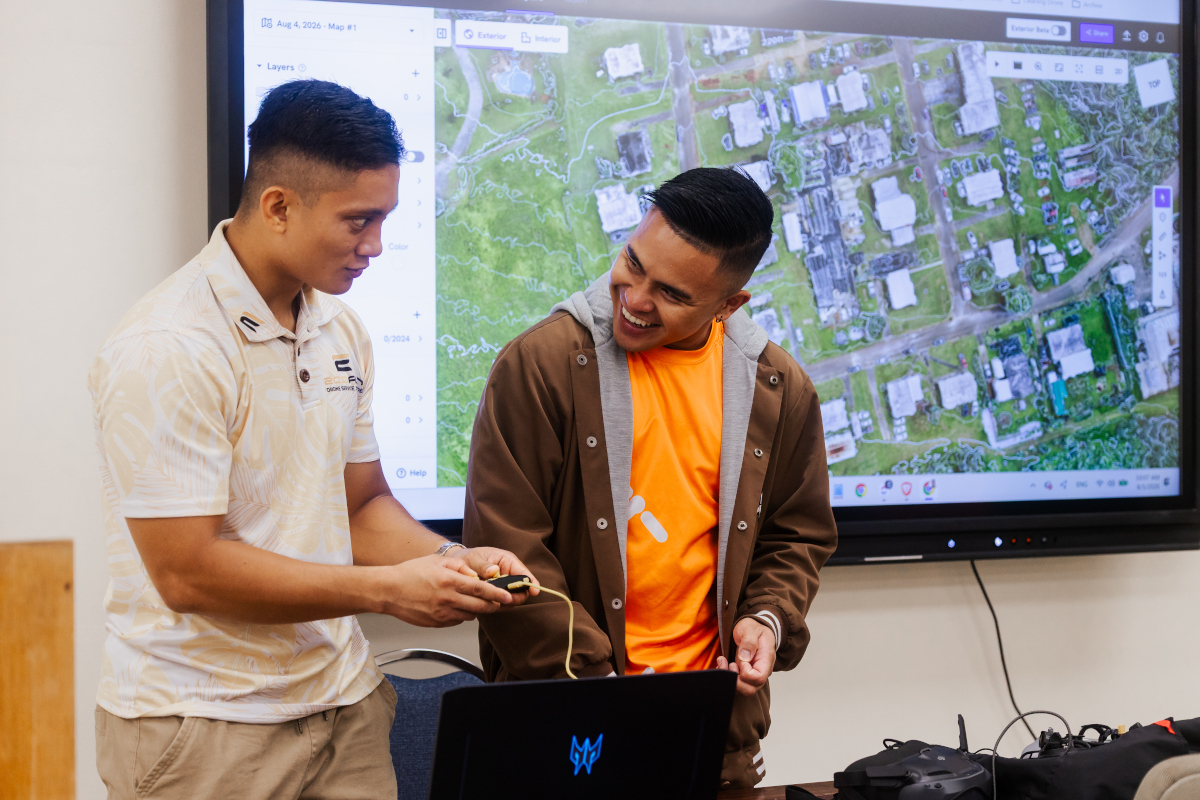
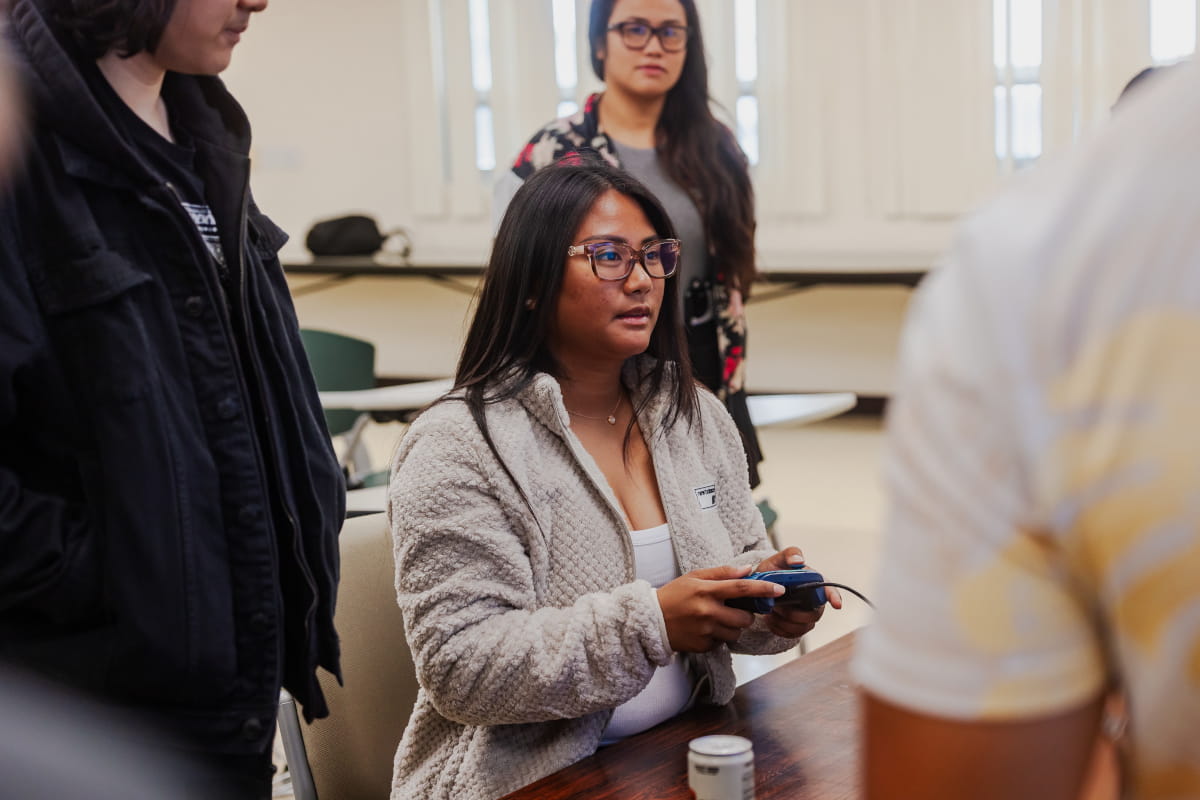
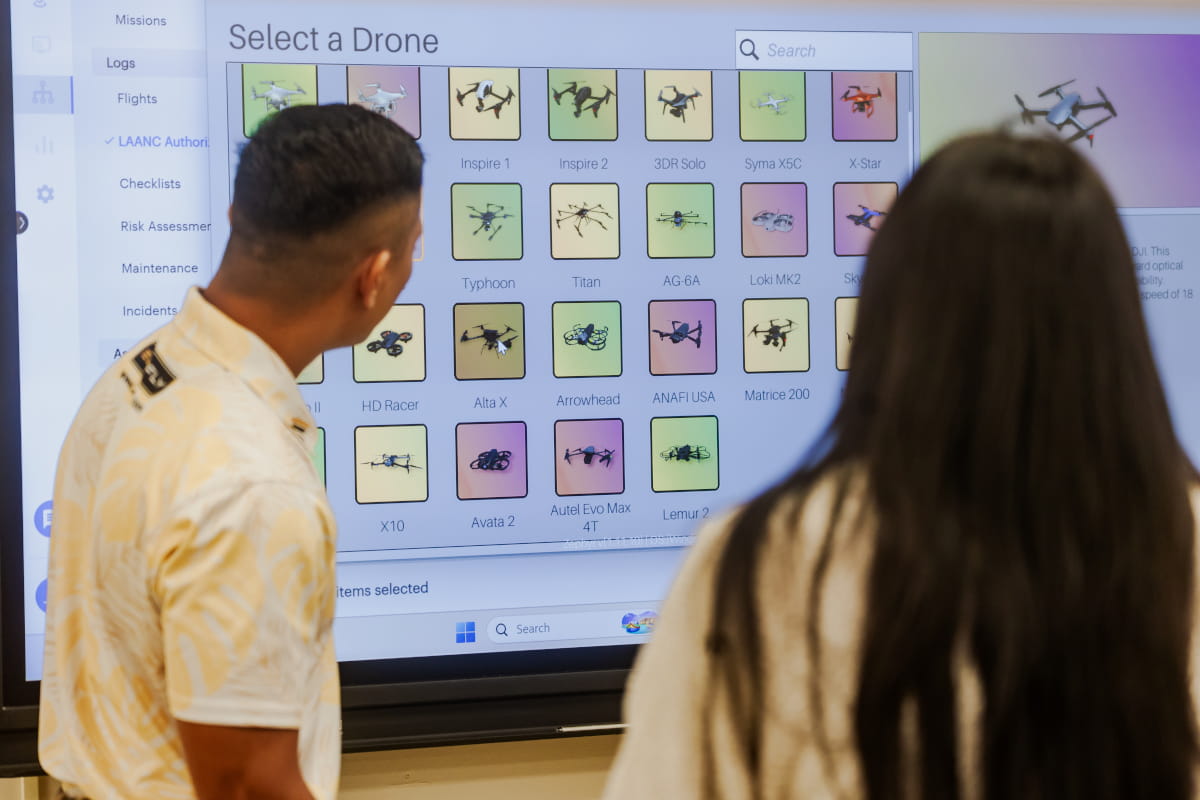
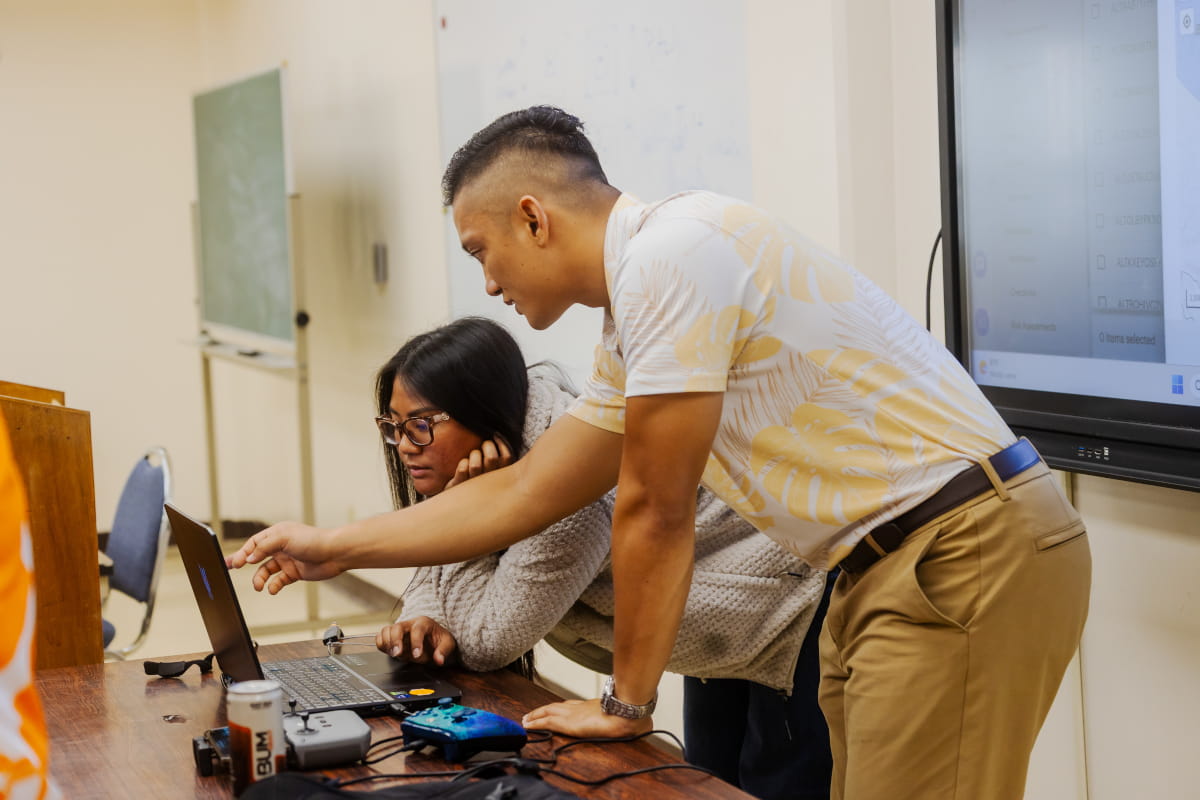
From July 27 through Aug. 7, 2026, the program’s latest cohort members participated in a two-week knowledge course hosted by local drone service provider, 2cofly. The course provided students with a comprehensive foundation for professional UAS applications, combining classroom instruction on airspace regulations, flight safety, and drone operations with practical, hands-on experience.
As of September 2026, nine participants from this year’s cohort have successfully passed the Federal Aviation Administration (FAA) Part 107 exam. The certification allows qualified individuals to operate small uncrewed aircraft for commercial purposes in accordance with FAA regulations.
One standout participant was Sam Kowalski, a surveying technology student at GCC, who achieved a perfect 100% score on the Part 107 examination. In recognition of the achievement, 2cofly will be presenting Kowalski with a drone to support his continued development and hands-on experience in UAS technology.
“The UOG Drone Corps was an incredible experience. It is a fantastic program that I would recommend to anyone looking to get their license,” he said. “I felt very confident going into my test.”
Building In-House Agency Capacity
As a program of the UOG Land Grant system, which works to advance the sustainability and precision of agriculture and natural resource management in the region, the UOG Drone Corps invites participants beyond the student populations at UOG and Guam Community College (GCC). This marks the second year the program has welcomed members from UOG faculty and local partners, including agencies like the Guam Power Authority and the Guam Department of Agriculture.
This expanded participation aims to strengthen each institution’s in-house UAS capacity by equipping more local professionals with the skills needed to integrate drone technology into a wider range of research and operational applications.
According to members like Kiana Hattori, a conservation officer with the Guam Department of Agriculture Conservation Law Enforcement Division, local professionals should continue to embrace drone technology because they help optimize existing workflows to be faster, safer, and more effective.
“From a law enforcement perspective, being able to quickly deploy a drone to scan an area while searching for a subject can provide valuable information while also improving officer safety,” she shared. “They can be deployed quickly to help search for someone who may need to be rescued, locate a suspect, or provide a better view of an area before sending officers in. To me, it really comes down to having another tool available to help you do your job more effectively.”
Advancing Local Research Through UAS Technology
The program’s sixth cohort also represents a major milestone by welcoming its first set of faculty participants from the university, including geotechnical engineering professor Dr. Phuong Tung Hoang from the UOG School of Engineering and aquaculture professor Dr. Hui Jiang from the UOG Land Grant agInnovation Research Center. By incorporating drone technology into their research work, they aim to capture detailed aerial observations of field sites, monitor changes over time, and make more informed research decisions.
For Jiang, who looks forward to applying her new skills to research focused on developing resilient aquaculture systems across Guam and the Pacific Islands, the opportunity to be part of the program is particularly valuable because it equips local researchers with the innovative tools they need to address environmental challenges unique to the region.
“We could have firsthand knowledge of the island’s environmental conditions, agricultural and aquaculture systems, coastal resources, and community needs,” she said. “It also strengthens UOG’s capacity to develop innovative solutions for Guam, particularly in areas such as environmental monitoring, agriculture, aquaculture, coastal resource management, and disaster resilience.”
Gaining Hands-On Training and Field Experience
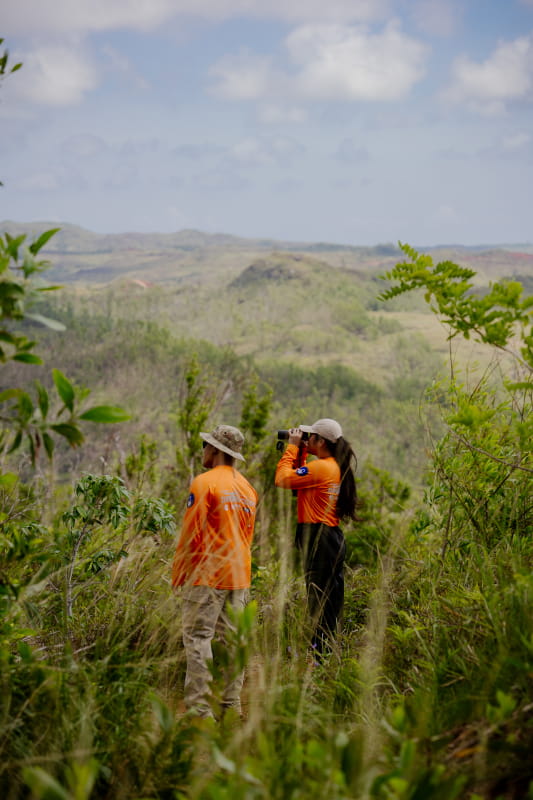
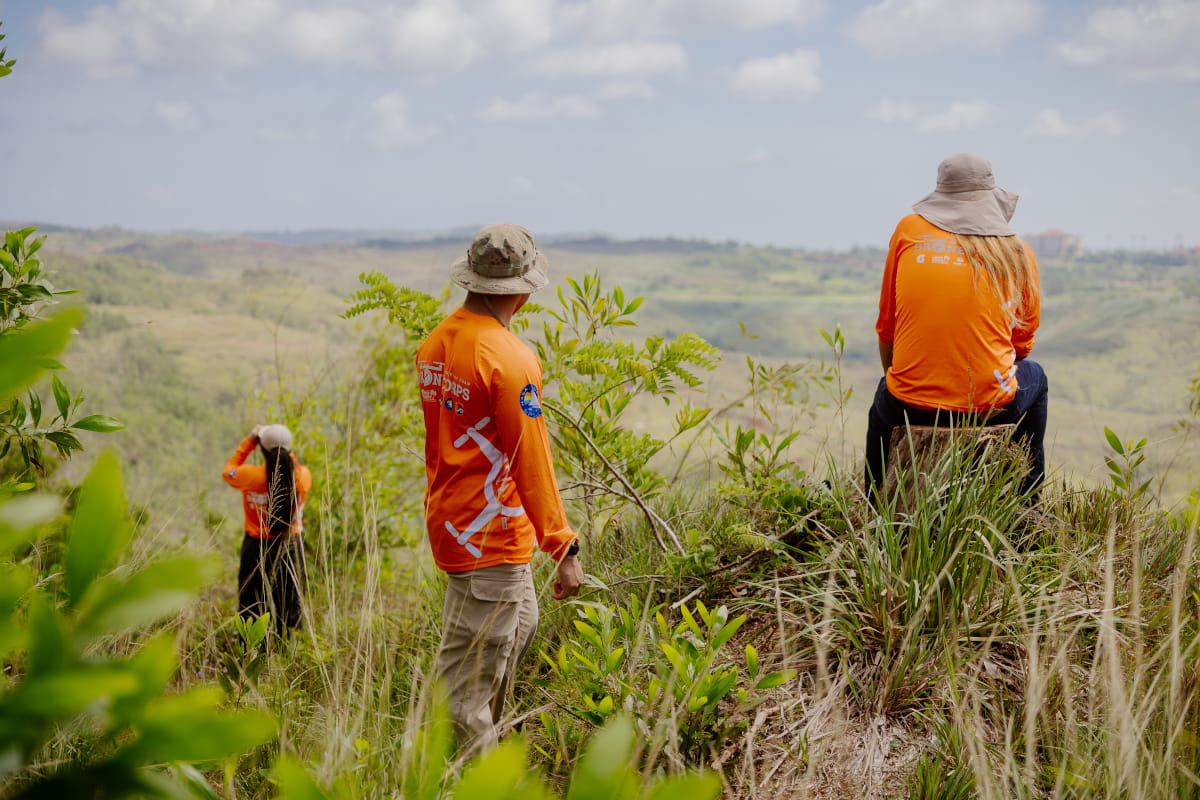
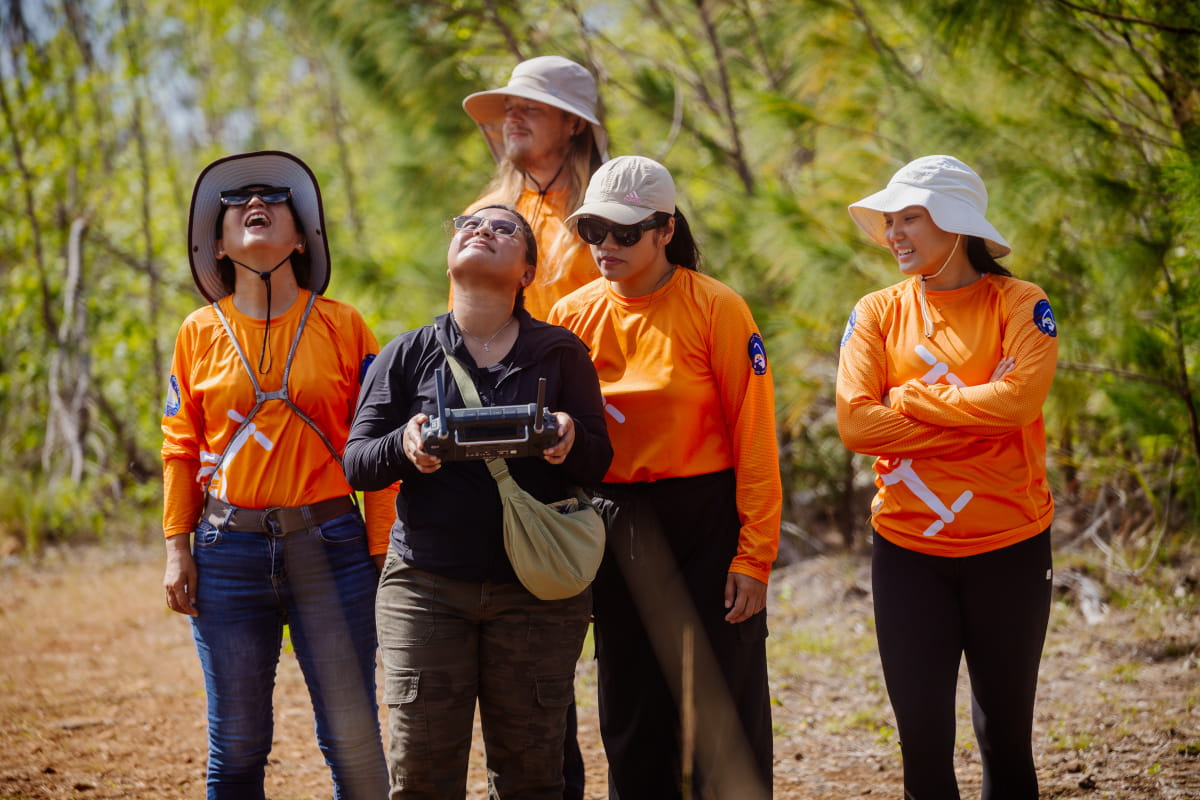
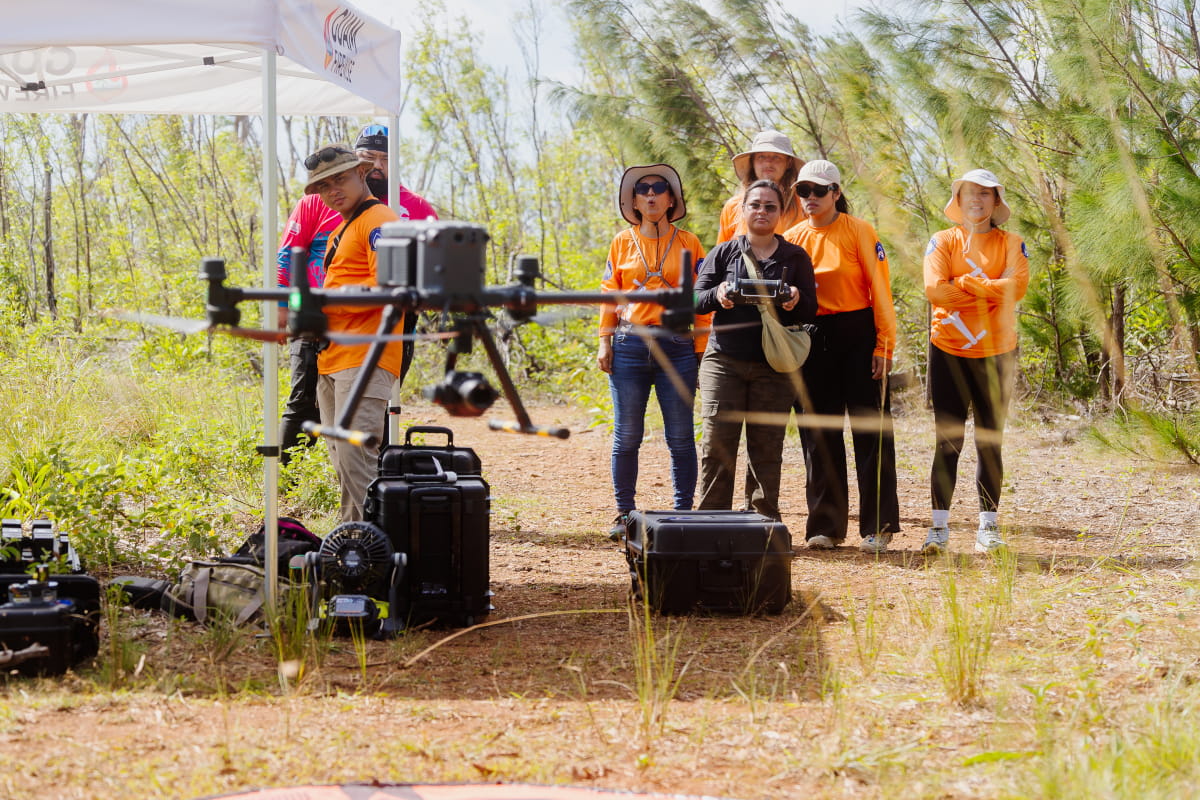
Following their licensure, the newly certified remote pilots applied their classroom knowledge in the field. In missions led by partners at Guam Department of Agriculture’s Forestry & Soil Resources Division, the cohort participated in environmental monitoring missions at the agency’s southern reforestation sites as visual observers.
For Hattori, the course provided crucial hands-on experience to observe how drones can be used in real-world site conditions.
“What really made the experience enlightening for me was seeing firsthand what drones are capable of,” she said. “As the instructors demonstrated the different applications of drone technology, I was honestly blown away by how much you can do with them. Whether it’s aerial surveying, inspections, or public safety, there are so many practical applications.”
Jiang added that the field missions and hands-on training gave her greater confidence in applying drone skills into her own research projects.
“During the missions, I was able to better understand the entire mapping process—from planning the flight and collecting aerial data to processing and interpreting the results,” she said.
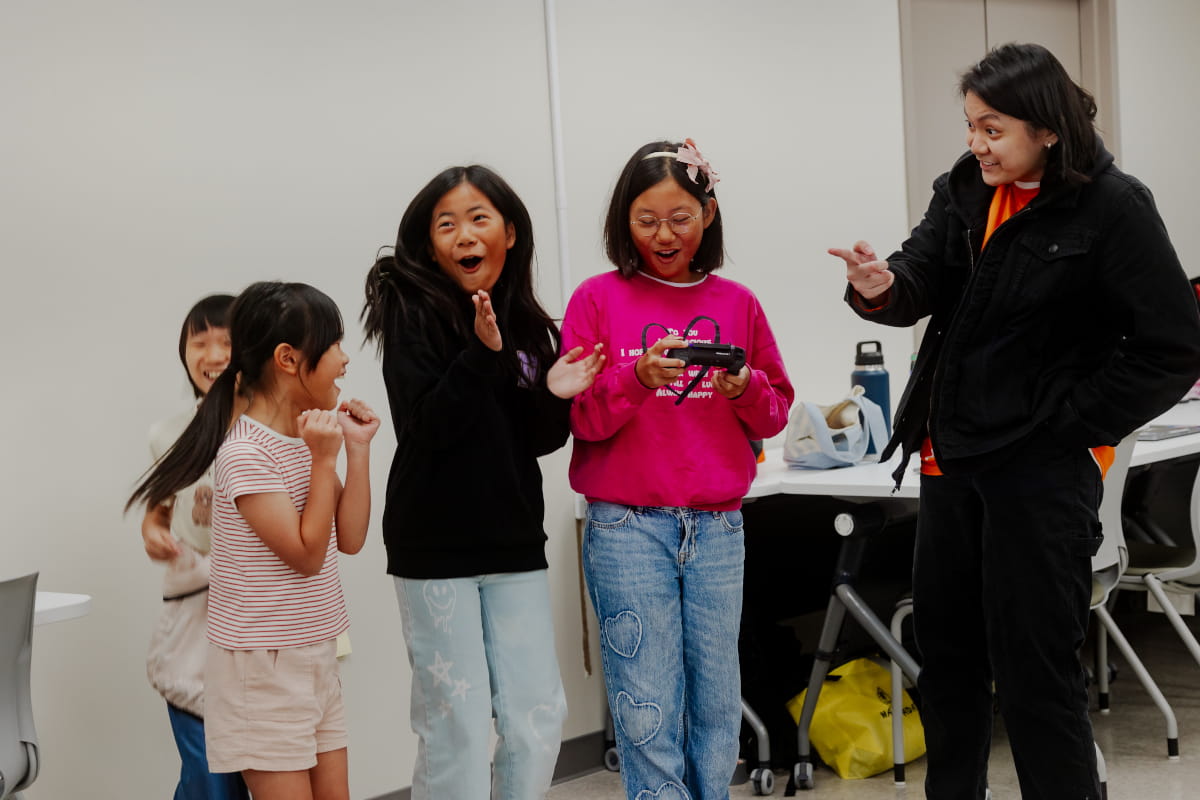
Members of this year’s cohort also had the opportunity to share their knowledge and skills with the island’s youth. During an educational workshop hosted by NASA Guam Space Grant’s STEM Saturday program, the remote pilots introduced students to drone technology through interactive activities involving coding and basic flight maneuvers.
With the addition of Cohort 6, the UOG Drone Corps has now officially certified 64 remote pilots, continuing to broaden Guam’s growing community of trained drone pilots. The program contributes to the university’s efforts to build research and technical capacity for work that involves emerging technologies like drones.
About the UOG Drone Corps
Hosted by the NASA Guam Space Grant and NASA Guam EPSCoR programs under University of Guam Land Grant, the UOG Drone Corps program has become a key initiative of Guam’s drone industry. The program’s core team conducts drone missions with local agencies and research partners, providing high-resolution imagery and geospatial data for projects such as post-typhoon assessments, coral reef monitoring, reforestation surveys, and other environmental mapping efforts. To further build local capacity, the program’s training arm prepares students and professionals for FAA Part 107 certification while equipping them with the knowledge and hands-on skills to integrate drone technology into their own work during its annual cohort. Since its launch in 2021, the UOG Drone Corps has supported the certification of 64 FAA-licensed remote pilots.
For more information, contact:
University of Guam Drone Corps
Email: dronecorps@triton.uog.edu