
Tåotao Tritons | More than a Picture: Chance Douglas and the Stories Behind the Lens
Tåotao Tritons | More than a Picture: Chance Douglas and the Stories Behind the Lens
Tåotao Tritons | More than a Picture: Chance Douglas and the Stories Behind the Lens
8/21/2026
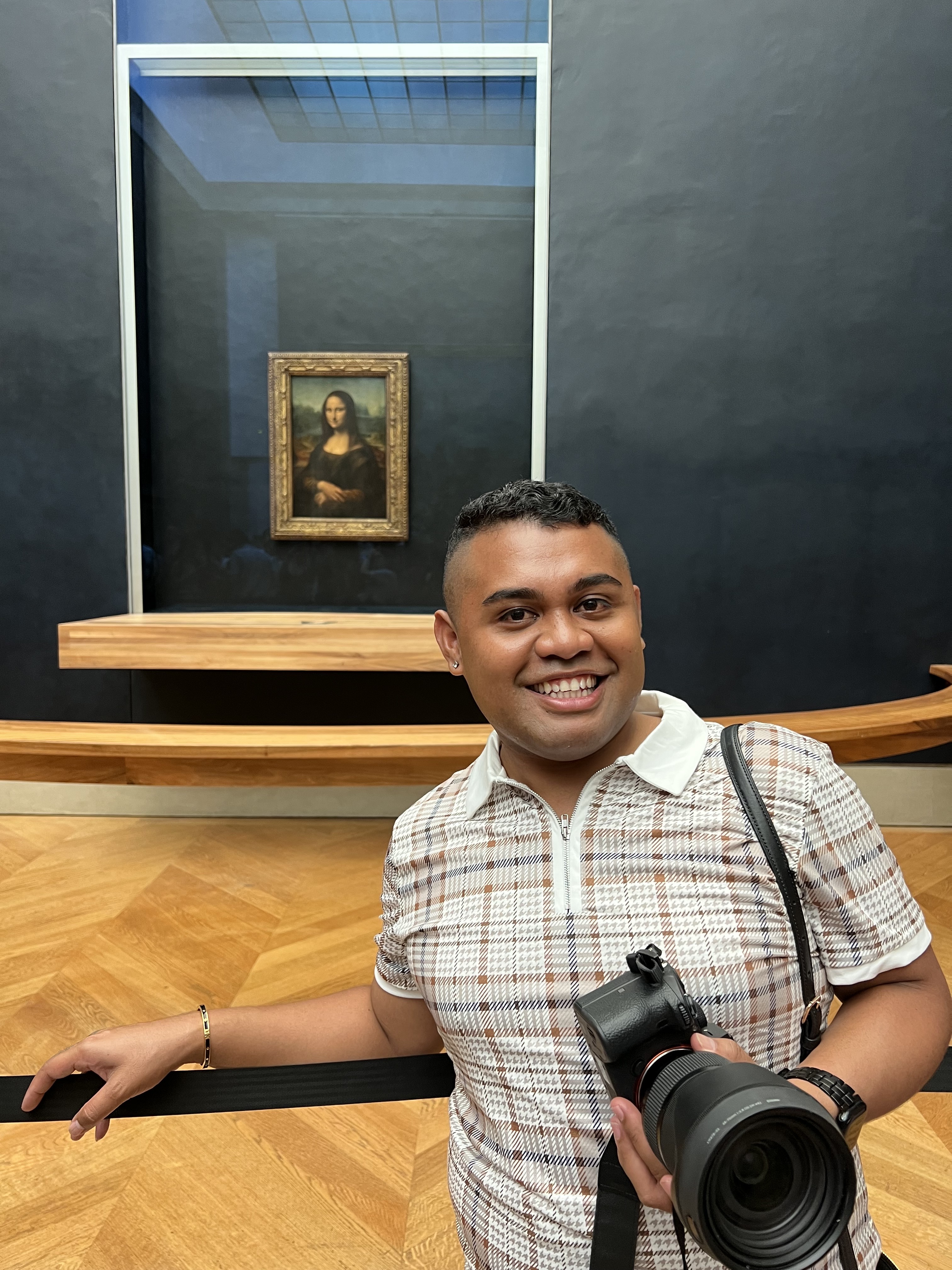
At the age of two years old, disposable cameras were already among Chance Douglas’s favorite things to play with. Since then, he’s learned that some of the most meaningful moments happen in a fraction of a second: a triumphant smile on a graduate’s face, a family gathered for a cultural celebration, or loved ones’ tearful joy during a wedding. The two-time University of Guam alumnus and current Program and Outreach Coordinator at the Financial Aid Office did not anticipate that a childhood hobby would eventually grow into something much more significant.
Learning Through the Lens
Douglas’s fascination with taking pictures grew with each passing year. As he got older, relatives upgraded him from disposable cameras to more long-lasting equipment, though developing the film remained an expense. For his birthdays, he would sometimes give the film rolls to his grandmother and ask her to have the photos printed as his gifts. His older sister became his willing—and sometimes unwilling—model. Douglas would do her makeup, direct her poses, and experiment with different setups. His childhood is filled with photographs of others, but ironically, he admits he only has just a few of himself.
“I was always behind the camera, so I don’t have pictures,” he says. “I have pictures of people, but not myself.”
It was not until after Douglas earned his bachelor’s degree that he was able to afford what he considered his first “real” camera and began taking photography more seriously. Through trial and error, studying the work of other photographers, and watching online tutorials from what he calls “YouTube University,” Douglas explored and absorbed different artistic techniques and editing styles.
Portraits became his primary focus. What started with friends and maternity shoots expanded into senior portraits, proms, weddings, conferences, cultural ceremonies, and other milestones. As he shared his work online, word spread, particularly within his home community of Palau, and that’s when he realized that photography could be more than a hobby.
Still, Douglas’s approach has been less about creating a heavily edited image and more about highlighting what’s already there. He gravitates toward a natural look and tries to make the people in front of his camera comfortable enough to show it.
“Everyone looks good in pictures,” he says. “It’s just how you get them to feel it.”
For Douglas, that often means joking with clients, getting to know them, or simply
giving them time to relax.
A Moment You Cannot Capture Again
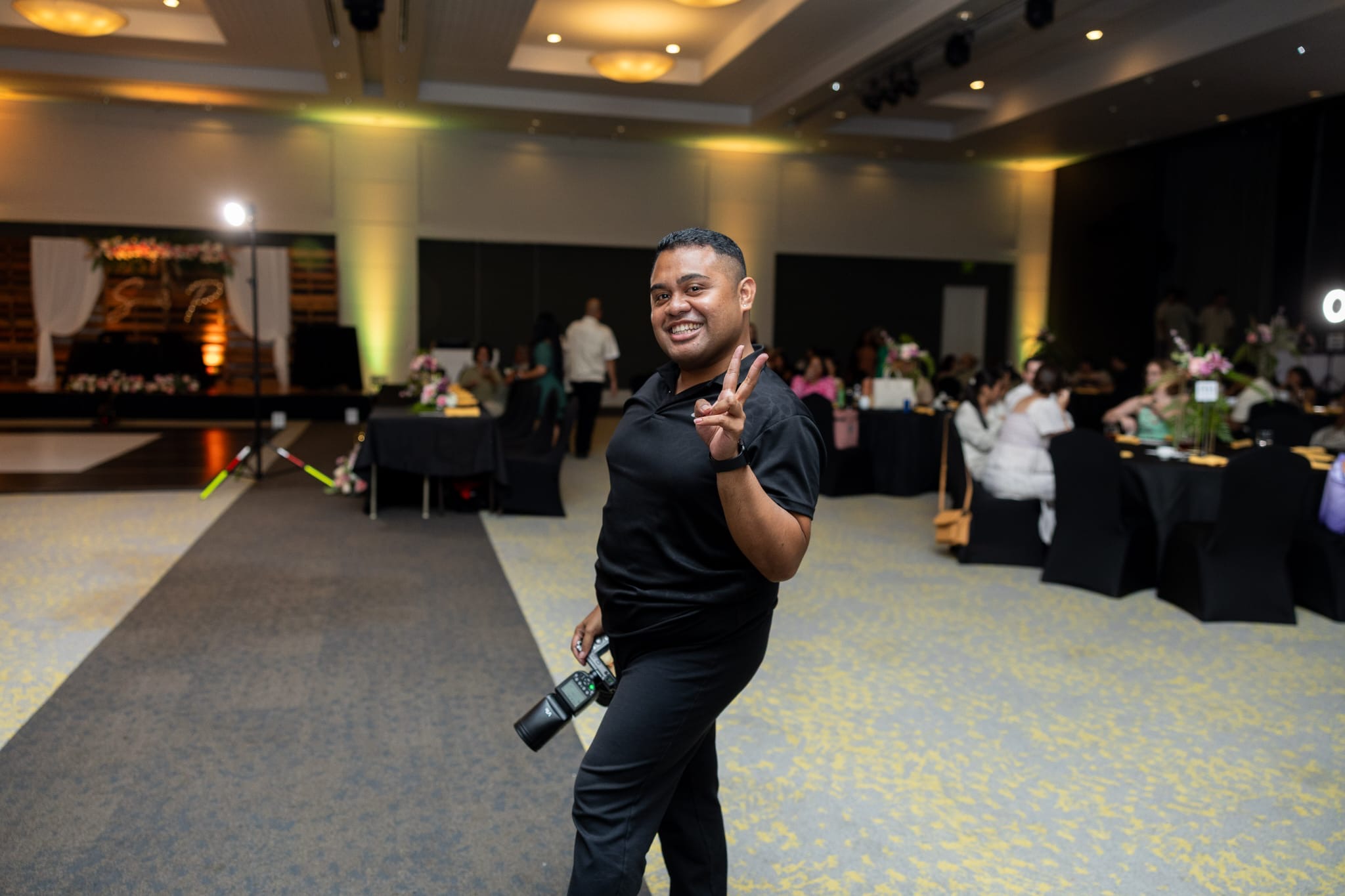
As Douglas developed his skills and gained more experience, he began to realize the weight a single image could carry.
One particular instance drastically changed the way he viewed his work. While at a high school function, Douglas snapped a shot of one of the students. Within hours of the event, the student passed away in a fatal accident, and suddenly, a picture that had been one of many from an otherwise normal evening became something irreplaceable.
The experience reinforced for Douglas that photography is ultimately the preservation of memories. A graduation, anniversary, or family gathering may pass in a matter of hours, but the photographs from those celebrations allow people to return to pieces of those moments long after they are gone.
It is no surprise, then, that Douglas has grown fond of candid photography. At a wedding, for example, he may momentarily shift his focus from the main ceremony toward the reactions happening around it, like an auntie wiping away a tear, a flower girl peeking shyly from behind one of the bridesmaids, or guests laughing at a story shared about the couple.
These moments unfold for only a few seconds, and Douglas recognizes they cannot be
simply staged again. “You can never say, ‘Start crying. Can you cry again?’” he jokes.
Documenting the Details
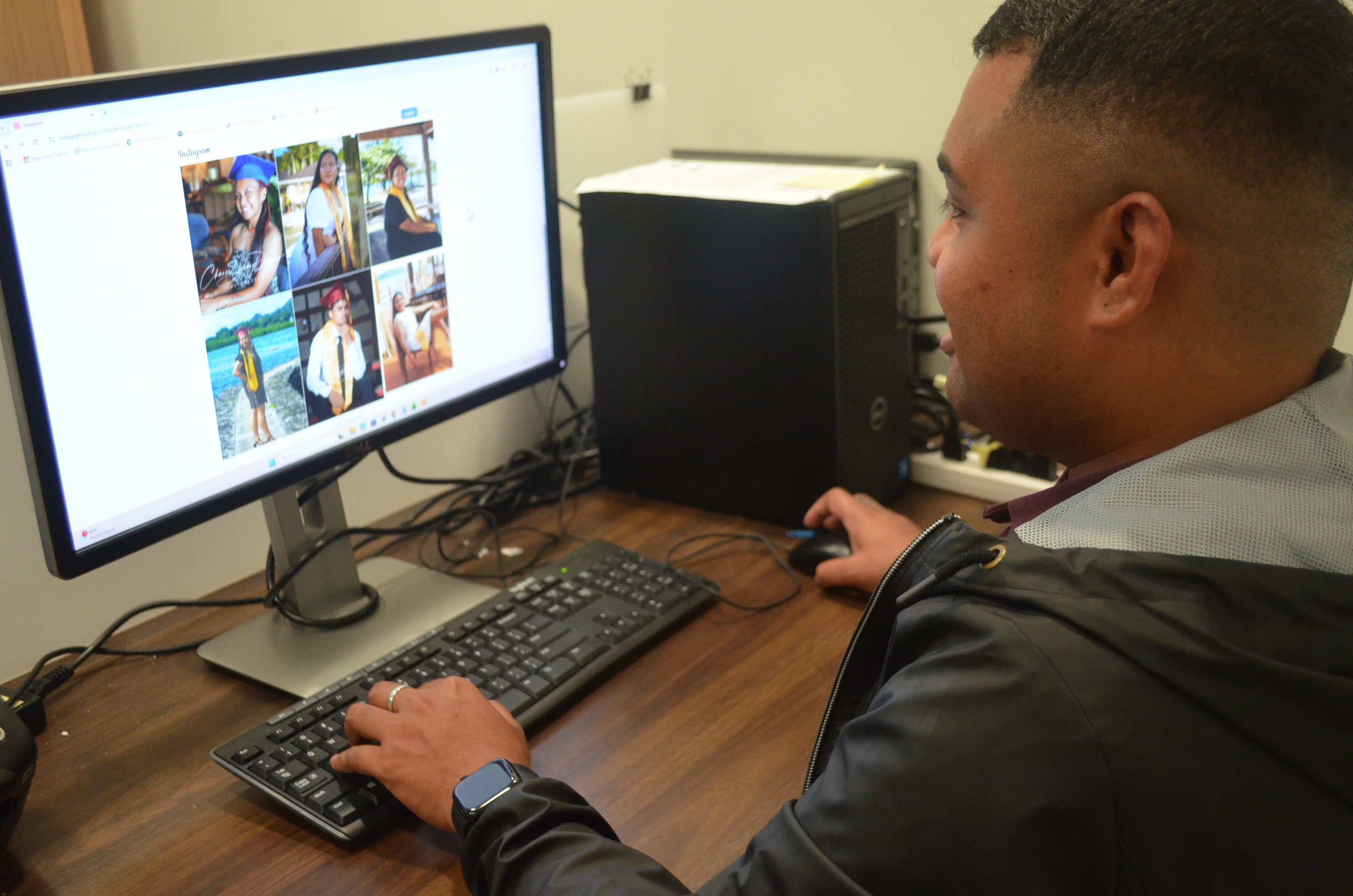
Douglas’s understanding of the moments worth capturing is also shaped by his Palauan identity and culture.
Among his favorite events to photograph is the Palauan first-childbirth ceremony, known as Omengat. The occasion brings together not only the mother, child, and partner, but also extended families and clans, with cultural details unfolding throughout the celebration.
Douglas explains that someone unfamiliar with the ceremony might naturally focus solely on the mother while overlooking a person, object, or interaction in the periphery that carries cultural significance. Because he understands the nuances, he can anticipate and preserve them alongside the larger celebration.
“I love the Palauan community because I can tell this story,” Douglas says. “I understand
the significance, the importance of the details.”
From Still Photos to Living Stories
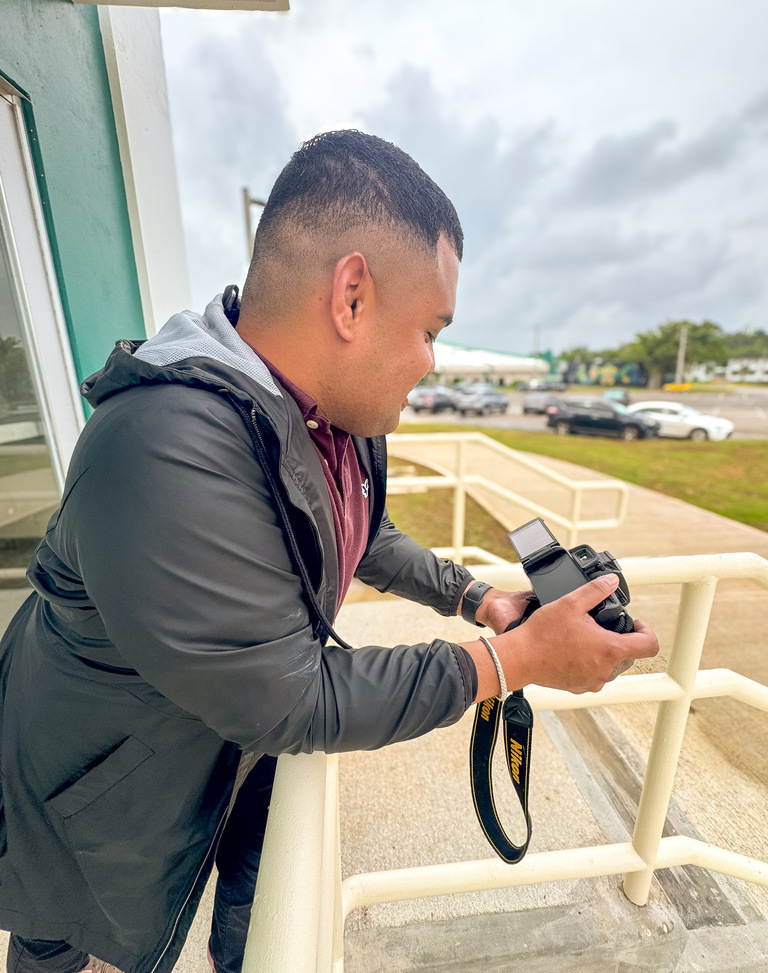
As photography continues to evolve, Douglas wants to evolve with it. He recently invested in new equipment and hopes to eventually expand into videography. One project he hopes to pursue hits close to home.
Douglas wants to document Palauan elders, including family members of his own, and preserve their stories in short videos that the younger generation can easily watch and understand.
For a culture in which generations of history and knowledge have been carried largely through oral traditions, he recognizes that some stories became increasingly vulnerable as elders grow older. He hopes videos can provide another way of carrying those voices forward.
From disposable cameras and rolls of undeveloped films to the celebrations and stories he hopes to preserve next, Douglas continues to find himself capturing moments, one frame at a time.